
Florida is our home. We’ve lived here most of our lives. We have weather here. It gets hot in the summer, mostly pleasant in the winter, and near perfect the rest of the year. The regular occurrence of hurricanes spices up our lives, some are tragic catastrophes, others are just inconveniences. We take the good with the bad and endure the challenges these mighty storms present to us. The latest one named Idalia wreaked havoc along the Gulf Coast north of us. My weather station, installed in our back yard last winter, recorded one gust at 18.6 mph. Other than that, we never experienced wind over 10 mph at our location. We had about 5 inches of rain on my rain gauge during the storm. That is nothing unusual for us even with typical afternoon thunderstorms. The greatest concerns with hurricanes are the tornadoes, and of course, the storm surge along the coasts and estuaries. Idalia did considerable damage along the north Gulf Coast, but Hurricane Ian devastated the barrier islands along the coast in Southwest Florida last year with reported 12-to-18-foot storm surge. We learn to get away from that as fast as we can.
As I’m writing this, it’s early September. The Tampa Bay Times offers us a scorching headline on their front page over an article from The Washington Post obviously intended to sensationalize the weather and remind us about the pending doom we now call the Climate Emergency.
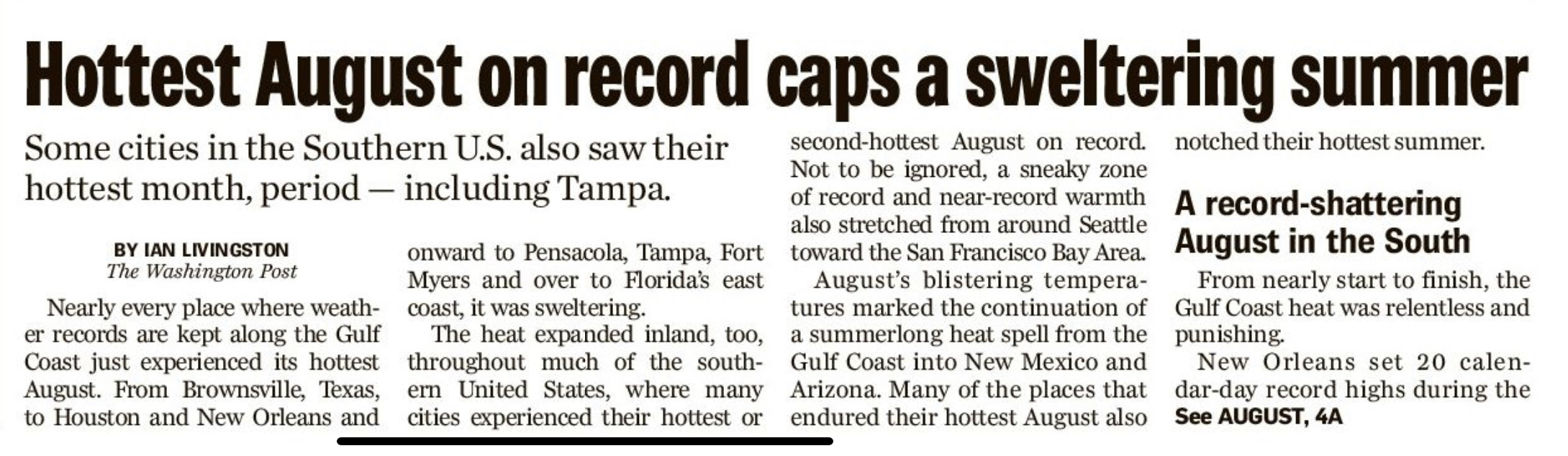 In the article we are treated to descriptors such as blistering temperatures and relentless and punishing heat. I heard a weather reporter describe the water temperatures along the Gulf Coast as boiling. The Washington Post article stated:
“A persistent heat dome, or zone of cloud-squashing high pressure, also fueled extraordinarily warm ocean temperatures. They surpassed 100 degrees off the South Florida Coast in late July. Gulf of Mexico sea surface temperatures reached their hottest level on record in mid-August and remained near record highs in the Eastern Gulf when Hurricane Idalia rapidly intensified last week.” 
The actual official Gulf water temperatures along the coast where Idalia intensified were in the high 80s, typical for August. If someone wants to find some ocean or Gulf of Mexico water that surpasses 100 degrees, I’m sure they can find it. We have a lot of shallow bays and inlets with dark muddy bottoms that absorb the sun’s heat causing the water to become very warm. The beach sand will burn your feet. The official Gulf water temperatures never approached the exaggerated numbers mentioned in the Washington Post screed.
As those of you who read my posts know, I’m skeptical of all news reports, especially from sources like the Washington Post, known for its persistent partisan slant and scientific obliviousness. Just so you know, we experienced no unusual heat where I live on the West Coast of the Sunshine State. In our yard, the highest August temperature we recorded was 94.3 degrees Fahrenheit. It got to 96.3 in July, the highest temperature recorded on my weather station which is viewable on Weather Underground and the Ambient Weather Network.
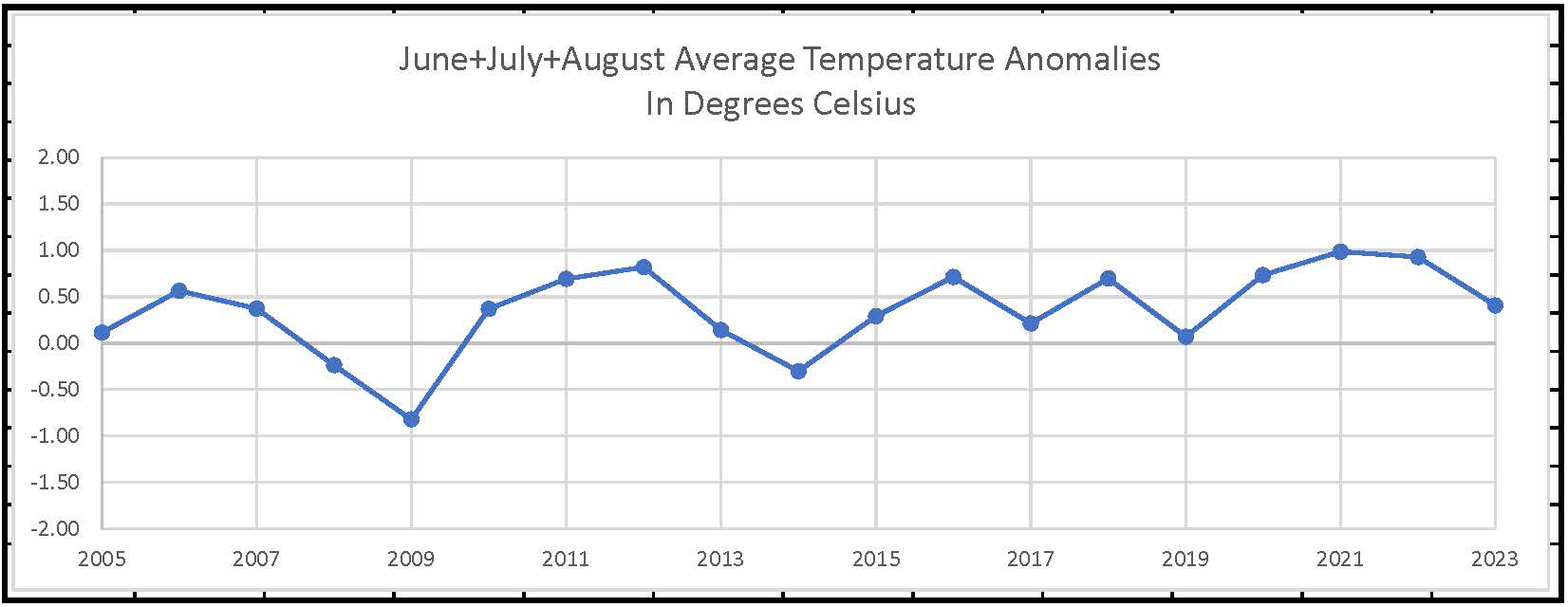
In addition to remaining skeptical, I’m also curious. I decided to check the official NOAA weather data which is available at NCEI-NOAA Temperature Index Time Series. According to the United States Climate Reference Network (USCRN), the temperatures for June, July, and August reveal that the summer of 2023 was rather normal. In fact, it ranked as only the ninth warmest summer during the past two decades of the USCRN Record (+0.41 degrees Celsius temperature anomaly). But you won’t read that in The Washington Post. It doesn’t fit the narrative.
Why do news outlets such as The Washington Post push their hysterical climate emergency narrative? Why does local media around the country parrot their propaganda? “If it bleeds it leads,” as they say. Could it be that fear drives obedience? Emergencies grant those who lust for power the tools to satisfy their obsessions. Or is it that sensationalism just drives clicks and profits?


 Reactions