Whose Anger is Justified?

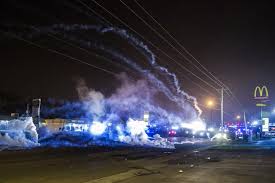
Ferguson RiotsIf you watched the news these last few days, you were likely bombarded with images of violence in the streets of Ferguson, as well as in New York City, Los Angeles, Philadelphia, Oakland, and Chicago among others.  You saw some people filled with rage, and you watched as they acted out their emotions by burning buildings, looting, turning over cars, and expressing their feelings in unfortunate ways.

If you turned on the sound, you heard commentators, government officials, experts, and members of the general public expressing their opinions about the cause of the violence and the state of the nation.  If you changed channels, turned the dial, or opened different websites, you witnessed an amazing range of perspectives.

What justifies rage?  Why do we let our emotions overtake our reasoning?  Don’t look for answers here.  I am just an observer like most of you. I confess to feeling deep emotions and even anger at the images and opinions I see and hear.

Instead of trying to figure out who is right and who is wrong, try to understand what is happening.  Try to empathize with the families, the members of the grand jury, the witnesses, the authorities, the peaceful protesters, the local business owners, and the media.  Try to grasp what motivates those committing all sorts of despicable and violent acts right in front of our eyes?  Understanding their actions is a struggle, perhaps an impossibility.  I am incapable of putting myself in their shoes, of seeing the world as they see it.

What angers me?  It is seeing human beings act irrationally, whether they are torching a police car because they hate the police, or behind a microphone making statements that are obviously untrue.  Irrational behavior takes many forms, but when the intentions are malicious and self-serving, and when the consequences are harmful to others, something must be done and rational leaders must come forward.

In the last few days, I’ve seen incredible examples of emotional hijacking where people let their emotions shut down their brains.  They seem to act like animals, but even that is not fair because animals rarely act in ways that are contrary to their own interests.  My dog would never intentionally poop in her own bed.

Irrational behavior is dangerous!  Its manifestations spread exponentially, like a chain reaction.  A word elicits a frown, which causes a scowl, which results in a punch, which leads to a death, which motivates a riot which leads to more death and destruction which ultimately destroys a society.   In this sequence, there are times when thoughtful people can and must intervene to prevent the escalation.  Ideally, they must act as soon as there is a frown, and before the first scowl.  If they allow the punch, it may be too late.

The people of Ferguson started down this path of destruction within minutes of the death of one of their own.  For some, their grievances find origins unrelated to this or any current events.  They are long-simmering.  This present insult opened old scars and brought many sympathizers, as well as those who wished to exploit this tragedy for their own harmful purposes.

What can be done now?

  1. The agitators, hooligans, and thugs must be arrested and dealt with through the criminal justice system.  There should be zero tolerance of their destructive behaviors in our society.  As long as these people remain to incite and enrage the mobs, chaos will continue.
  2. Thoughtful and credible people within the community need to take charge.  They should gather their fellow citizens together, listen to their grievances, and work together to find solutions.  Through this participative process the community can heal and forge a constructive vision for its future.  A critical mass of people in the town has to invest in such a positive outcome.
  3. The community must work together to assist those who have been harmed by this unfortunate episode.  They may not realize it now, but if they do trust in each other and commit to finding solutions, a renaissance for Ferguson is possible.

The media needs to change its approach.  Sensationalizing cherry-picked tragedies distorts our perspective.  In a society of over 300 million people, there will be bad news, every day of the year.  The networks and the mass media publications have a responsibility to provide perspective and to help their readers and watchers to understand what happened and why.  It is not enough to just horrify us and look for people to blame.  We need adults reporting the news to us.  Each network, every publication, and even colleges of journalism should take a look at themselves and ask what they can do to improve society, not just sensationalize its failings.  We the people need to turn off and refuse to buy their distortions.  Only the fittest will survive, but we the consumers define which is the fittest.

Ironically, we learn as a society.  These terrible experiences get our attention, unlike a thousand normal days.  I remain optimistic about the future of our country.

Posted in Human Behavior, Media | Tagged | Leave a comment

The POTUS and the Null Set

White HouseImmigration is a good thing!  My wife and her family came to this country through the legal process and became U.S. Citizens.  In my family, we have English, German, Hispanic, and Irish relatives, among others, who immigrated to this country only one or a few generations removed.

Our country was founded by immigrants!  Even the indigenous peoples who met the European explorers migrated to our hemisphere from other lands on the other side of the world.  All modern humans are the descendants of migratory people.

Our immigration laws and policies are not working.  According to the media, political leaders, and government officials, there are millions of people here illegally.  Obviously, this is not supposed to happen.

What do we do about this?

Enter the President of the United States who says he’s tired of waiting for Congress to take action.  He appeared on a number of television networks last night in prime time and announced an executive action ostensibly to solve the problem for about five million people.   In order to be included under his order, immigrants must satisfy at least four criteria.

  1. They must be parents of U.S. Citizens.
  2. They must have been in the United States for a minimum of five years.
  3. They must pass a background check to determine if they have committed any crimes.
  4. They must pay all back taxes owed on earnings while in the United States.

This is an amazing set of conditions.  On first reading they may appear entirely reasonable and even compassionate.  On further analysis, I’m wondering if anyone could possibly satisfy all four criteria.  Could anyone prove it beyond reasonable doubt?

Under the current interpretation of the Fourteenth Amendment of the U.S. Constitution, anyone born in our country is a citizen, even if the child’s parents are not.  A large number of children become U.S. Citizens in this way every year.  Some of their parents are here legally, migrant farm workers and others on student visas or with green cards for example.  The President’s order does not apply to these parents who have legal documents authorizing them to be here.   So the plan only deals with the subset of parents of U.S. citizens who are here without documentation.  How will they prove they’ve been here five years?  Would they have to prove they never left the United States, even for a few days or even a couple of hours?  Why not four years? Or three years?  Or ten years?  Only parents of U.S. Citizens without any immigration documentation who can somehow prove they have been here at least five years are eligible to come forward for consideration.

A criminal background check determines whether a person has committed a crime.  If it is known that these parents of U.S. citizens entered the country and stayed for at least five years without proper authorization, then they violated immigration laws and possibly other laws as well.  Unless they are pardoned, they cannot pass a background check.

If someone resided in our country for at least five years and was gainfully employed, they should have paid income, Social Security, and Medicare taxes.  Under the President’s plan, these parents of U.S. Citizens, who are here illegally, who somehow pass criminal background checks, and who owe back taxes, would then be required to pay those taxes before satisfying the requirements of his executive order.  How will we know how much they owe?  Did they work under false documentation and identification?  If so, this should disqualify them?

Well there you have it, a null set.  No one need apply, because no one could possibly satisfy all these requirements.  The President apparently violated the Constitution and his oath of office issuing an executive order that pertains to no one.  He managed to irritate more than half the country, while taunting the very constituents he hoped would applaud his actions.  Furthermore, he created a bureaucratic nightmare guaranteed to frustrate large numbers of legal and illegal immigrants.

I need a drink.

Posted in Politics | Tagged , , , , , , , | Leave a comment

A Rose By Any Other Name Would Smell As Sweet

Tis but thy name that is my enemy

Thank you William for bringing Juliet to life so she could speak such profound truth.  What difference does it make what a thing is called?  The smell is that of a rose, even if it is called rafflesia or perhaps eastern skunk cabbage.  Such errors in nomenclature do not alter the truth, a rose is still a rose.

We cringe, especially when the error comes from a person of influence or authority. If a distinguished botanist should name that rose a dandelion, we would surely roll our eyes, but we would set a child straight without a smidgen of acrimony. It is, after all, a teachable moment.

Why would a botanist call a rose a dandelion? Why would a chemist call carbon dioxide carbon? Why would a world leader call a vital component of our atmosphere a pollutant? The truth endures, words succumb. Consider the source and the motive.

Carbon is not the same as carbon dioxide, but today there are headlines in almost every major newspaper announcing that China and the United States have agreed to cut carbon emissions. In fact, very little carbon is emitted in the United States. On the other hand China does emit great quantities of carbon in the form of soot. The agreement has very little to do with soot. It is about carbon dioxide.

To a chemist or a biologist, referring to carbon dioxide as carbon or carbon pollution is crazy. Why don’t they call it oxygen?  Carbon dioxide molecules are mostly oxygen, about 73 percent. That surely would be confusing, but calling it carbon is just as illogical, if not as confusing. Is it deception? Do they believe we will more likely go along with their schemes, if they call it a dandelion?

Why do we call carbon dioxide a greenhouse gas when it has nothing to do with greenhouses or the greenhouse effect? A greenhouse heats because warming air cannot escape.  In the atmosphere, molecules of water, and to a much lesser extent carbon dioxide, absorb infra-red, converting molecular vibrations into increased translational motion which is what we call temperature.

Why do they call it carbon pollution? It is not carbon and it is not a pollutant. Carbon dioxide is a natural, even vital component of the atmosphere. Without it, plants would die and animals would soon thereafter starve to death.

The concentration of carbon dioxide in our environment is quite variable. On top of the Hawaiian volcano, Mauna Loa, air that has been collected, purified, and dried to remove all water vapor has an average carbon dioxide concentration of about 395 ppm, although this varies with the seasons. In an airplane cabin, the concentration may be above 1200 ppm, because of all the people breathing. Plant nursery owners pump carbon dioxide into their greenhouses to accelerate plant production. The atmosphere above the ice in Antarctica during the recent glacial period contained less than 200 ppm carbon dioxide. There are daily and seasonal cycles of carbon dioxide concentration in the air, as well as geographical influences. Plants and certain geochemical processes remove it from the atmosphere, animals and other geochemical processes add it back. The oceans of the world contain most of the world’s carbon dioxide and much of this originates from the oceanic crust and the mantle beneath it. Some of the carbon dioxide dissolved in the global oceans escapes into the atmosphere as the water is warmed by the sun and other forcings. Additional carbon dioxide in the oceans combines with calcium and other minerals to form carbonates.  Has anyone asked why we should try to manage the concentration of carbon dioxide in our atmosphere?  What concentration would you like?

So, please!  A rose is not a dandelion and carbon dioxide is neither carbon nor a pollutant. Stop trying to deceive us.

Posted in Climate Science, Human Behavior, Media, Politics | Tagged , , , , , , , , | Leave a comment

On Being Offended

Two PigsIf I call you a Pig-Skirted-Hog-Mistress, you might be offended. But I have every right under the U.S. Constitution to call you that and any other name I choose.  How we react when we feel offended by verbal abuse hurled in our direction, is completely up to us.  Freedom of speech is a guaranteed right, but freedom from offense is not.

Sometimes we forget that we’re in charge.  We forget that feelings are emotions, and we can decide how we respond. For some weird reason, I sometimes find myself calling my dog Chicken-Lips, but she doesn’t seem to mind, in fact she wags her tail in apparent delight. She chooses not to be offended by any of the silly names I call her.   If someone calls me a jerk, that does not mean I’m a jerk, it might not even mean the person thinks I’m a jerk.  How I react is up to me.  I might laugh, but whatever my reaction, it is mine and I own it.  If my anger takes over, it’s because I lack control of my anger.

Calling someone a jerk is allowed under our laws, but punching someone in the face is not. Children are less likely to have learned this lesson.  Adults are supposed to have matured, which means their brains have developed constructive strategies for dealing with their experiences and their emotions.  Our actions should follow reason, no matter how justified our emotional response.

Back in the 1960’s a misguided do-gooder, who was actually a law professor, petitioned the FCC (Federal Communications Commission) under its Fairness Doctrine to require broadcasters to provide balanced programming whenever addressing controversial issues. In responding to this petition, the FCC commissioners thought they could avoid offending people by controlling what was allowed to be said over the public airways.  It took about two decades for the courts and common sense to rectify the harm from this absurd attempt to control speech.  There is an excellent opinion piece in The Wall Street Journal today by Robert Corn-Revere, Free-Speech Foes Call an Audible: Bringing the FCC into the ‘Redskins’ debate is an invitation for First Amendment mischief, providing some historical perspective and explaining why such inclinations to control speech are dangerous and also unconstitutional.

I fail to comprehend why someone would feel offended when they hear the word Redskins spoken on the radio or television, or even if they are in the stadium.  It is an irrational response.  No one in the audience is being called by that name.  We would expect that everyone associated with the team is proud to be considered one of the Redskins.

There is nothing inherently derogatory about red skin, white skin, black skin, purple skin, green skin, or brown skin.  They are just rather inaccurate descriptions of various skin colors.  Are some colors good and others bad?  In this case, it actually refers to the red paint that brave warriors put on before going to battle, not to the color of their natural skin.  Seems like a good name for a football team entering an athletic contest.   Ironically, the team colors are burgundy and a yellowish hue.  Perhaps they should change the team name to the Burgundy Integuments.

If someone is offended by Redskins, perhaps someone else is offended by Cowboys.  (See my most recent post on Reactions at DocStephens.org)   How about the Cleveland Indians, who are mistakenly named after a sub-continent half-way around the world.  Should we cease calling Oklahoma by its name when we find out it means “red person.”  How about the Hoosiers of the Indiana University?  Isn’t it about time we corrected that Columbian blunder, and surely, Hoosiers can’t be a good thing.

Some people seem to find joy in being offended. I consider it a character flaw.  Why should I allow anyone to control my emotions or my reactions?  For God’s sake, keep the FCC and the government out of this and similar issues.  If you can’t stand hearing the word Redskin when watching a football game, change the channel and go see a psychiatrist.

Oops!  I hope I didn’t offend anyone.

Posted in Human Behavior, Media, Musings, Politics | Tagged , , , , , , , , , , | 2 Comments

The NFL: Protecting Endemic Peoples and Ungulates

It’s disgusting, and we need to do something about it immediately! The most surprising aspect of this controversy is how long we’ve endured this offense without anyone taking action.  This is why I am so delighted that the FCC and U.S. Patent Office are finally considering various interventions.  Thank the deity who shall not be named in a secular forum.

The FCC does not believe certain words should be uttered in prime time broadcasts because they deride and denigrate whole groups of people, adversely influencing impressionable young persons as well as others of certain sensitivities.  As George Will shared in his Washington Post Column on October 15, 2014:

 . . . The FCC petition argues that broadcasting the word . . . is akin to broadcasting obscenity and pornography, is hate speech and an ethnic slur that keep[s] alive the spirit of inhumanity, subjugation and genocide and may cause violence. . . . Besides, it is a nuisance, defined as something annoying.

First of all, they aren’t boys, they are definitely men. Referring to grown adult men as boys is just unacceptable.  Additionally, men are males, not females.  It is beyond ridiculous that grown men should be compared to female Bovinae, one of ten genera of medium to large-sized Ungulates.

Cow in a Field of DandelionsEveryone on the team and indeed everyone in this second largest of our states should be highly offended.  They should demand immediate action on the part of the FCC and the U.S. Patent Office. Obviously, the National Football League is incapable of acting responsibly in this matter.

Please, contact your Congressperson now!  We need an Amendment to the Constitution prohibiting all annoyances whether intentional or otherwise.  There is no legitimate justification for offending another person in an enlightened society.

Posted in Human Behavior, Media, Musings, Politics | Tagged , , , , , | 1 Comment

Education and Happiness: Reminiscing on a Saturday Morning

A long time ago, at least a thousand years it seems, I taught environmental science classes for first and second year college students. Most of these students were undecided about their majors and their futures, but quite sure neither would be in a field of science.  Mathphobia was a common affliction, and avoidance was a common behavior.  The realm of mathematics was entered with a certain degree of stealth, kind of a sneak attack.  This was one of the most popular science courses for these students, at least partly because very little mathematics was required, and also because the subject matter was relevant to their lives.

Environmental science is considered an interdisciplinary field of study like earth science, astronomy, meteorology, and oceanography, among many others.  Introductory college courses such as these play an important role in the curriculum, because the big ideas of science and mathematics can be presented through the application of relevant course content.  A student could learn quite a bit of biology, chemistry, physics, and mathematics, and it could be relatively painless.  I say “relatively” because I just remembered one of my favorite complaints from a student.

That’s not fair, Dr. Stephens, your teaching us stuff we don’t already know.

It was a branch campus and we had a very small science department, consequently, many of the students also enrolled in other courses I taught. Some went on to study more advanced science and mathematics.  A few even pursued careers in related fields, but recruiting science majors was not my goal.

Everyone who earns a college education should understand basic principles of and about science and mathematics, but it is even more important that they learn how to learn. In my opinion, the most critical outcome of a college education, or education at any level, is the drive or motivation to learn and to keep learning for the rest of our lives.  I also hope educated people are humbled as they grow, to respect all they do not know, and to appreciate what others with different knowledge, skills, and experience may offer.  In fact, one reason for seeking a formal education it to protect us from our own ignorance, as well as the ignorance of others.  The more we experience in life, the more we realize how much there is yet to be discovered, and the more we may question what we learn or experience.

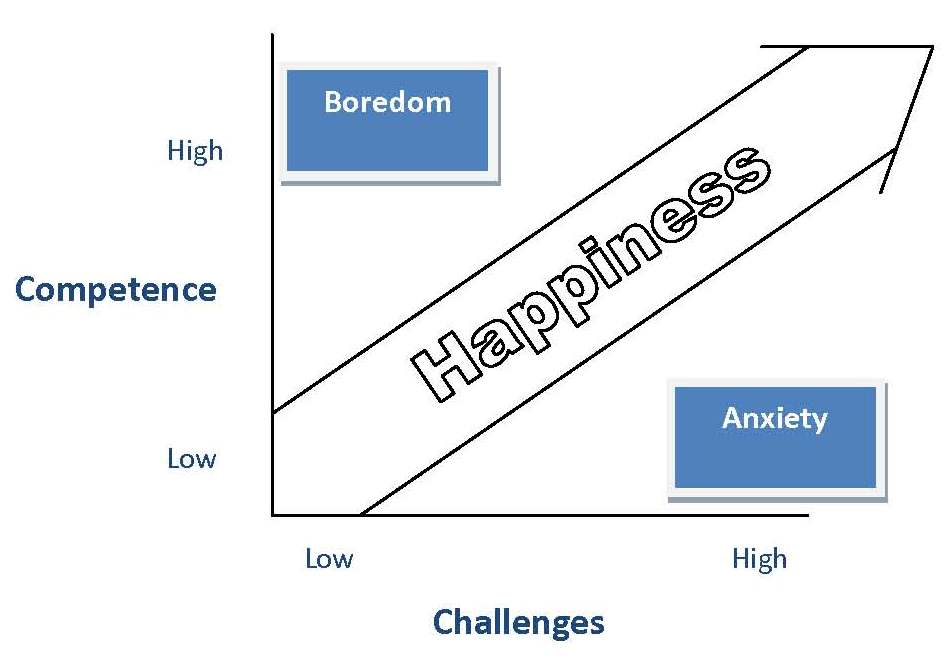
The good life is about learning.  It turns out we are happiest when we are striving for greater competence and seeking greater challenges.  My goal as a teacher was to help my students appreciate this important idea.

Happiness-Competence-Challenge - Graph

Posted in Biographical, Education, Human Behavior, Musings | Leave a comment

Demonizing

Leonard Pitts writes a column that appears in our local paper on a regular basis. In my opinion, what he says is usually interesting, and I admire his ability to present his points with clarity and passion.  Ironically, I almost always disagree with him.  Today was no exception.  In this current column he demonized a significant portion of the American public.  This is how he concluded his October 9, 2014, column titled “Cheerios, gay marriage and the Supreme Court” which appeared in Highlands Today.

. . . conservatives now find themselves stuck on shrinking islands of intolerance in a swirling sea of change.

This was the last sentence in his column focusing on the Supreme Court’s inaction this past week regarding the issue of marriage and equal protection under the law. He indirectly implies that all conservatives are intolerant.  He arrives at this conclusion based upon his interpretation of the comments made by some public figures he considers to be conservative. In fairness to Mr. Pitts, the main point of his column appears in this paragraph.

In avoiding a decision, the court makes a decision, if only the decision to tacitly acknowledge what already is. If one might have preferred a declarative statement supporting marriage equality in all 50 states to an implicit recognition of marriage equality in the places it already exists, well this non-ruling is still seismic.

Yesterday, I expressed my sentiments about these legal and moral issues in a post on this website at Marriage v. Marriage.  Today I will focus on the unacceptable practice of demonizing, and Leonard Pitts has offered a convenient example.

When we stereotype in such a way that wrongly or unfairly alleges a group is evil and opposed to what all good and earnest people stand for, we are demonizing. Maligning someone as a racist, a bigot, a homophobe, a sexist, or as a denier of history or science would be defamation if it were untrue.  Wrongfully labeling an entire group of people in this manner is demonizing.

Lately, defamation and demonization have become the default strategy in partisan politics. The tactic “If you can’t win a debate, smear your opponent” has morphed into “smear your opponent, and you won’t need to debate the issues.”

Another example of demonization is provided by Robert Kennedy, Jr., as reported in the Washington Times, on September 23, 2014 in which he said:

. . . there should be a law that lets authorities punish skeptics and deniers – those who engage in “selling out the public trust,”.

this is a frightening worldview!  He considers himself the gatekeeper of truth.  Those who dare to offer contradictory ideas he calls skeptics and deniers, and  he wants them punished by the authorities, the government.

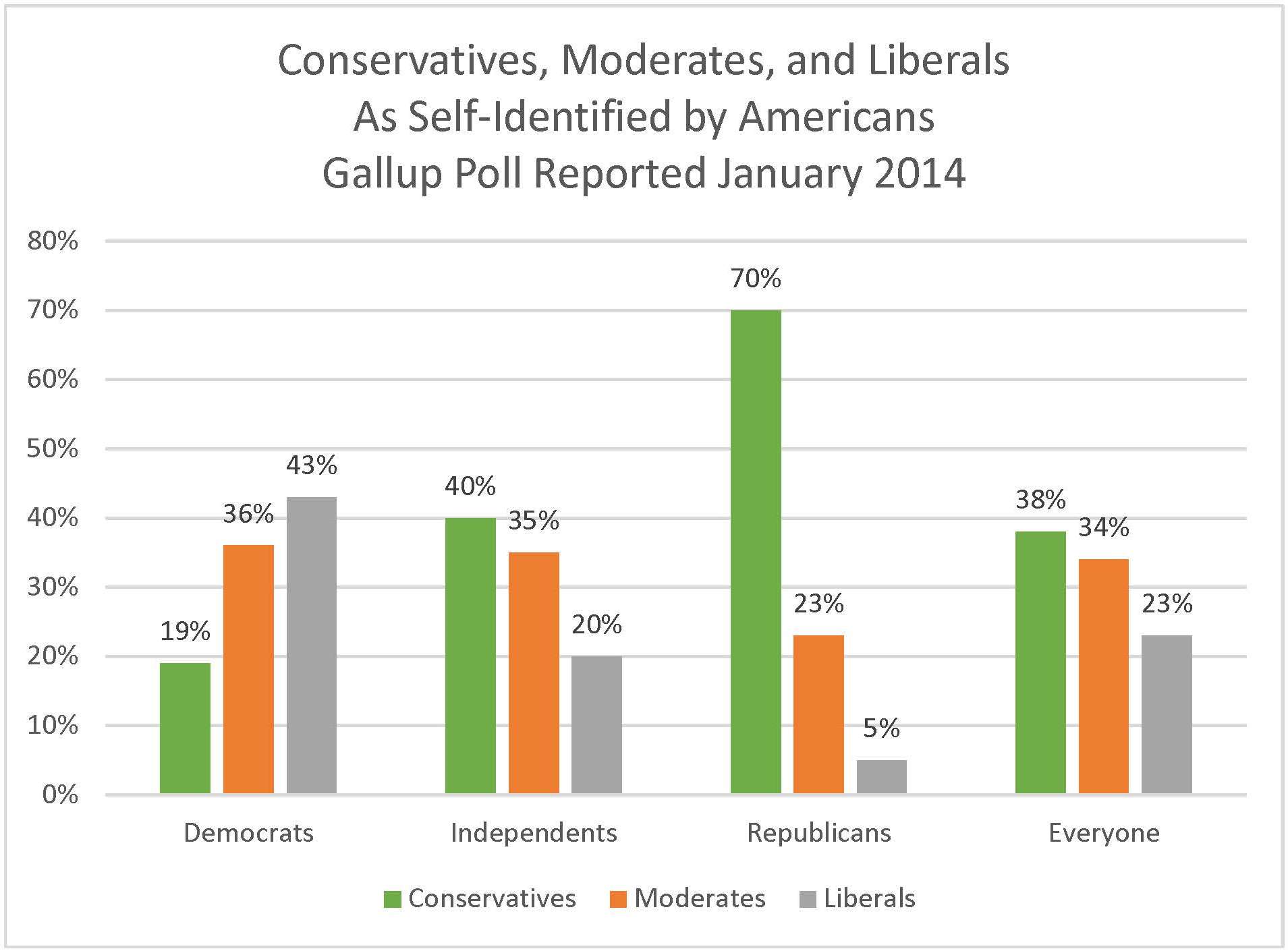
Leonard Pits apparently believes that conservatives are intolerant. Does he actually know if they are more or less intolerant, on average, than moderates or liberals?  Of course he doesn’t. Is anyone tolerant or intolerant all the time?  What is a conservative, or a moderate, or a liberal, anyway?  They are labels with ambiguous meaning.  Frankly, we don’t even know what it means to be a Democrat, a Republican, or an Independent unless we register to vote in a state or territory that requires such a declaration.

For more than 20 years, Gallup has been polling Americans about these labels. They’ve asked us whether we consider ourselves conservative, moderate, or liberal.  The polls have also considered the differences in how Democrats, Independents, and Republicans identify themselves by these labels.  Here are the results of the most recent poll.

Conservatives Moderates and Liberals - Gallup 2014

Indeed, we all fall into this trap of stereotyping.  Individuals who consider themselves to be Democrats, Republicans, or Independents often use negative stereotypes to denigrate their political opponents.  Demonization is extreme negative stereotyping, and it is wrong.  I don’t give credence to many political advertisements, but I do pay attention to candidates for office who use these tactics.  First of all, most of what they present is dishonest, and then it’s presented with the intention to vilify the opposition.  No wonder our politics is so polarized.

Posted in Human Behavior, Politics | Tagged , , , , , , , , , , , , | Leave a comment

Marriage v. Marriage

The states and the courts define marriage as a contract between two spouses which traditionally have been different genders. This civil contract includes certain rights and obligations as defined by each state or jurisdiction and is recognized by the federal government for various purposes.  Recent court rulings have stressed the importance of providing equal treatment under the law regardless of the genders of the spouses involved.

This week, the United States Supreme Court refused to consider several challenges to this practice, thus leaving the issue in legal limbo. Same-gender marriages are currently recognized in some states, but not others.

Marriage has also been defined, sanctioned, and practiced, by many of the world’s religions, including Judeo-Christian faiths. Many religions object to marriages between individuals of the same gender, others do not.  Some religions sanction and practice polygamous relationships as well, although this is not common in the United States and not legally recognized or even allowed by any of the states under existing statutes.

When two people plan to marry, they must obtain a license issued by a county under authority granted by a state. This is required of all legally recognized marriages.  Whether a couple wants to have their marriage sanctioned through their own religious affiliation is optional.  The state does not have authority over anyone’s religion, just as the religion does not have any jurisdiction over the state.

We find ourselves in the midst of not one, but two arguments:

  1. Should two people of the same gender be allowed to marry under the law?
  2. Should religions be allowed to limit marriages to those that conform to their beliefs?

I cannot predict the outcome of the first argument as it is a question before the courts. Whatever the outcome of these legal proceedings, the word “marriage” will likely apply to the recognized relationship leaving us forever burdened with hyphenated marriages.

The second argument has an obvious answer, and that is yes!  Under the First Amendment of the U.S. Constitution, laws restricting the free-exercise of religion are considered unconstitutional.  In our country, a religion may decide whether they wish to conduct, recognize, sanction, or bless a ceremony or a marriage.

So, the legally recognized relationship shall be called a marriage, but a religion can call it whatever they decide, including marriage, holy matrimony, blessed union, spiritual bond, etc. Followers of different religious faiths may be married by law and also by their religion, as is now the case.  They must be legally married, but they might also have their relationship, made holy, blessed, spiritually united, or sanctioned under some other title.  They should not feel the word “marriage” has been hijacked.  The definition of the legal relationship may change, but the religious manifestation of the word would not necessarily change, unless the governing bodies of the religions agreed.

With this understanding, we can focus the debate to the first argument, who can get legally married, which is definitely not about semantics.  I personally feel it would be helpful if the issue were settled consistently for all the states and jurisdictions within our country.

Posted in Human Behavior | Tagged , , , | 1 Comment

Faulty Assumptions and Illogical Reasoning

Editorial writers often present arguments based upon false assumptions. When this is followed by illogical reasoning, the result may be amusing, frustrating, or both. This, of course, depends entirely upon the perspectives and psychopathologies of the readers and whether they had their morning coffee.

For several days, I’ve been churning and agitating about three specific editorials that appeared in our local newspaper. Frustration overwhelmed amusement partly because I was traveling and could not immediately respond. (Writing sometimes resolves my frustrations.) Finally, I have time to react, but first a disclaimer. The publisher/editor of our local newspaper is a good guy and I consider him a friend. He also has a wonderful sense of humor along with an exceptional talent for writing. I expect he could quite easily point out my blind spots and hyper-neurotic emotional ticks as exposed in my prose. He would do so with great hilarity and no apparent frustration, whatsoever. I admire him for that.

Last week Highlands Today ran a series of editorials on the subject of climate change and global warming. There were actually three different editorials published over four days. The Saturday editorial titled “On a warmer planet, which cities will be the safest?” originated in the Gainesville Sun. The Sunday and Monday editions repeated an editorial from the Concord, NH Monitor, under two distinct headlines, “Tide may be turning on climate change debate” on Sunday, and “Nations need action on climate change” published on Monday. The editorial that appeared on Tuesday, “Global warming is a global problem” came from the editorial staff of Highlands Today.
136069main_bm5_high


First some background. Every sentient being knows that humans can alter the climate and we’ve been doing that for thousands of years. The first efforts at agriculture in China and the Middle East are known to have had local effects on humidity, wind, temperature, and even the composition of the air. Deforestation around Mt. Kilimanjaro altered conditions on the summit which changed the characteristics of its alpine glaciers. The urban heat island is a well-known phenomenon caused by replacing forests and grasslands with concrete, asphalt, and steel structures. New Orleans continues to subside below sea-level making it prone to flooding. Does anyone think the climate in and around New York City is the same today as it was in 1600? Yes, we burn hydrocarbons in large quantities releasing water and carbon dioxide into the atmosphere and these gases, among others, trap infra-red electromagnetic radiation which we call heat.

Apparently, quite a few people think that humans are the sole cause of climate change and global warming. It’s as if a stable climate existed in some perfect state until we came along and messed it up. Whenever you hear someone such as a politician or even a news reporter utter the words “combat climate change” you are witnessing someone who suffers this absurd delusion. One thing all sentient beings should know, humans are not capable of stopping climate change.
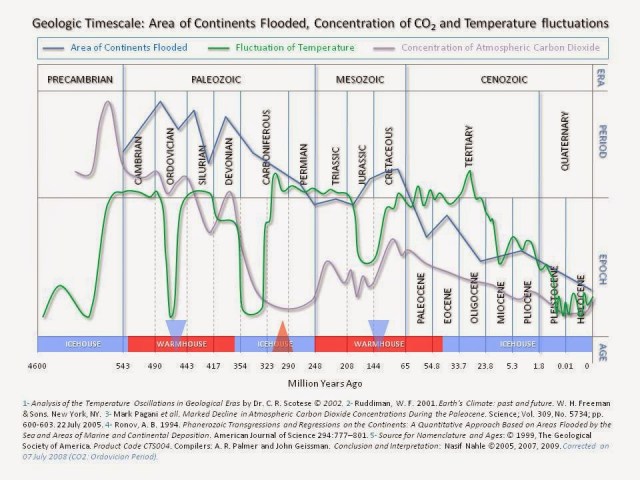
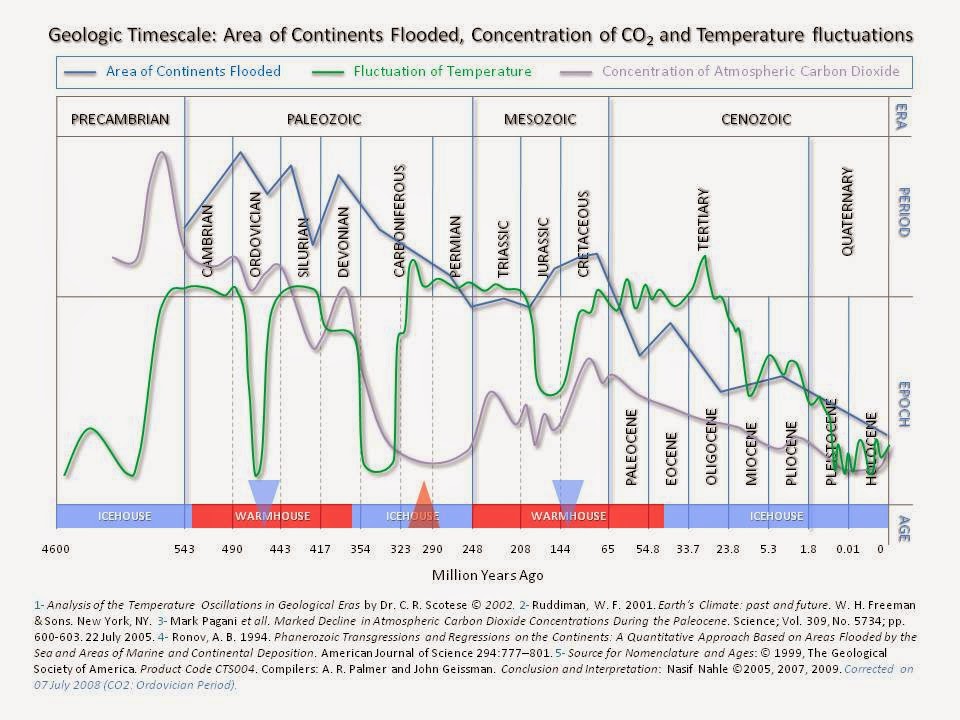
IMG_0309Global climate is always changing, always has and always will. The Earth is a dynamic planet in a solar system, and in a galaxy within a local group in a universe that is always changing.   The Sun is a variable star with an ever-changing output orbiting around the center of mass of the Milky Way Galaxy, moving into and out of regions of space with varying amounts of dust. Our orbit around the Sun is always changing its ellipticity and consequently the Earth’s distance from this primary heat source. The tilt of our axis is not constant varying by several degrees, therefore altering the timing and intensity of our seasons. The Earth wobbles as it rotates on its axis causing the northern and southern hemispheres to experience different seasonal intensities depending upon which pole is tilted toward the Sun in the winter or summer and when the Earth is closest or farthest from the Sun in its elliptical orbit. Most people don’t know that the Earth is currently closest to the Sun in early January and farthest from the Sun in early July. Twelve thousand years ago when the most recent glacial period was ending it was the opposite.
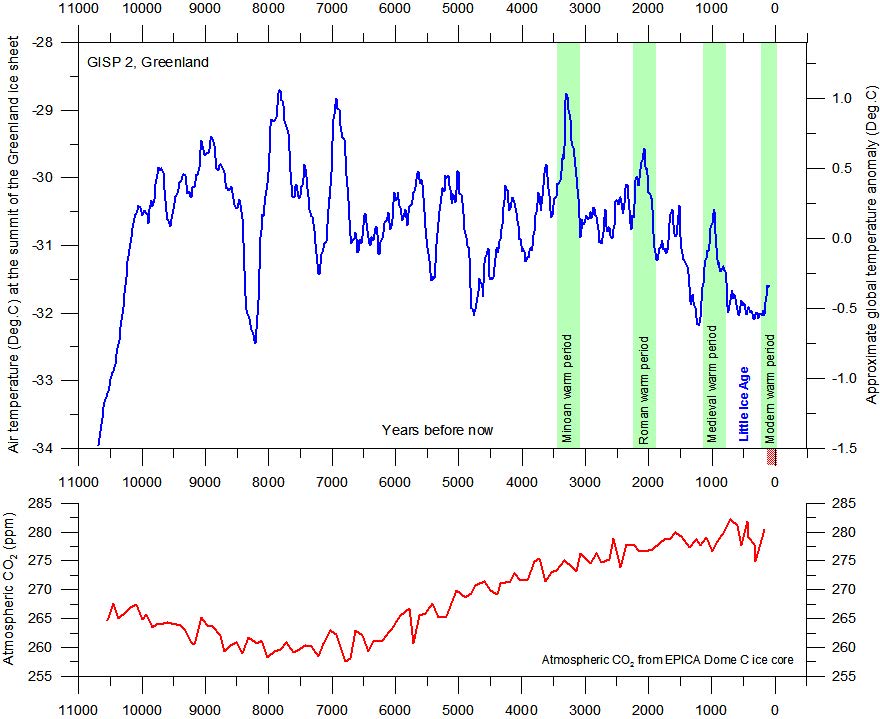
Greenland Ice Core Temperature and CO2 11000 BPThe Earth’s surface is always changing as well. When continental ice caps melt, the water runs downhill into the creeks, rivers, lakes, and oceans affecting sea level, but the land levels are also changing as the weight of the ice lessens. This is called isostasy. In North America, the Great Lakes and Hudson Bay have been rebounding for at least 12 thousand years and they will continue to rebound until the Earth enters the next glacial period in several thousand years. As strange as it may seem, the East Coast of the United States is subsiding because of its position relative to a pivot point near the Appalachian and Adirondack Mountains. As the Midwest moves up, the coast from Florida to Nova Scotia moves down. The Sahara Desert wasn’t’ always a desert and the Amazon River Basin hasn’t always been a rainforest. Ironically, if the Sahara were to be irrigated and greened, the Amazon rainforest would surely decline because much of the fertile soil of the Amazon basin comes from the Sahara transported across the Atlantic Ocean.

Yes, we live on a dynamic planet and the climate is always changing. Humans cannot stop it from changing, no matter how hard we try, no matter how much money we spend, no matter whether we burn gasoline in our fuel tanks or domesticate highly trained gerbils whose food is planted, irrigated, and harvested using solar and wind energy exclusively.

My first assumption: humans can and do change the climate.

My second assumption: climate changes whether humans cause it or not.

My third assumption: there is no perfect, stable, or natural global climate.

My fourth assumption: no one knows how much humans are affecting global climate, and no one knows how the global climate is changing or would change naturally.

My fifth assumption: All the king’s horses and all the king’s men and women, cannot return New York City, or Miami, or San Francisco, or any other urban or developed area to their pre-historic environmental states.

And therefore, I conclude that our best strategy is to adapt. Our ancestors did, so we can too.

We must be smart about it!  We should not build cities in floodplains of great rivers, just as it is not a good idea to camp inside the crater of an active volcano. If New York City is to remain a habitable place, someone is going to have to figure out how to keep the Atlantic Ocean out. If the past is a reliable teacher, sea level is going to rise and the land under that and other coastal cities is going to subside for several hundred or even several thousand years as the continental ice sheets return, and they most assuredly will. And of course it would be great if we had abundant energy that didn’t use up valuable resources while adding Gigatons of water vapor and carbon dioxide as well as many other gases and particulates into our atmosphere every year. Let’s get working on this right away.

Now that I’ve articulated my assumptions and exposed my reasoning abilities for all to judge, please allow me to vent my frustrations over a few of the fallacies and irrationalities that were published in the three editorials referenced above. Following the order in which they were published, I’ll begin with the editorial from the Gainesville Sun.

Other Views – Saturday, September 27, 2014 – Gainesville Sun on planning for climate change: On a warmer planet, which cities will be the safest?

Of the three editorials, the Gainesville Sun never once mentioned or attributed climate change or global warming to humans. Reading between the lines, however, we discover the deception, when the editorial refers to climate change, it is only considering human caused climate change. The editorial called for managed development or adaptation and for political leadership.

This week’s United Nations cli­mate summit featured some progress in addressing climate change, but also showed that state and local officials can’t wait for world leaders to act. As the [New York] Times story suggested, Florida faces some of the nation’s most significant challenges in the decades ahead.

In the above quotation from the editorial, we discover that the writer assumes that climate change is bad and is caused by humans. It’s as if we would not need to concern ourselves with natural climate change. The writer further assumes that humans can do something about it, beginning with unknown actions taken by local, state, national, and world leaders–a false assumption that leads to a questionable conclusion. While it is true that humans have the potential to adapt to climate change, and our leaders should encourage planning and action to protect lives and property, the United Nations Summit was all about international energy policy and limiting carbon dioxide emissions into the atmosphere. For political and scientific reasons, neither will lead to any significant outcome related to climate change.

A warming planet and rising sea levels pose a particular threat to an already scorching state where 80 percent of residents live or work in coastal counties. Yet Florida’s most prominent political leaders refuse to even acknowledge climate change is real, much less start planning for it.
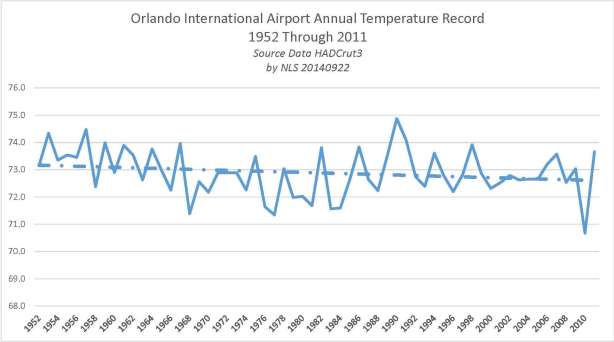
Orlando International Airport Temperature Record

We’ve been accurately monitoring global temperature for about 35 years, and globally there has been no significant warming during the last half of that period. Florida has actually been cooling slightly over the last 60 years according to land based temperature records. This quotation contains pure hyperbole. It is used to criticize various political leaders, but more importantly, to make the editorial board of the newspaper seem wiser than those political leaders it chooses to criticize.

Floridians can’t afford to wait to plan for climate change. If officials are going to sit on their hands, it is up to average citizens to join with researchers in planning for rising temperatures and sea levels in our particularly vulnerable state.
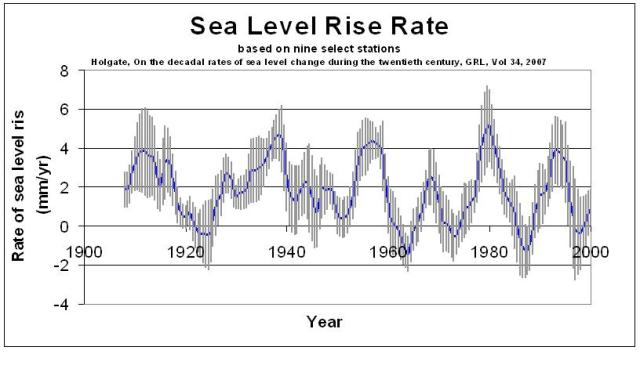
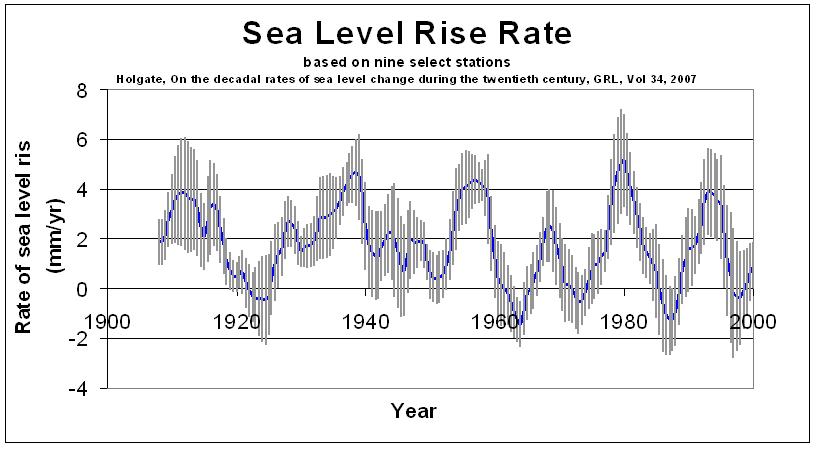
holgate-9-station-with-std-dev-digitized1So who’s waiting? And who is sitting on their hands?  This is unsubstantiated criticism of unknown people.  People who buy property consider their risks.  Developers plan for environmental changes.  Communities set zoning restrictions and mitigate problems based on many factors including risk to the environment.  Insurance companies protect themselves by charging more for people and businesses who chose to gamble on the known and unknown risks.  Sea level has been rising along the Atlantic for a long time, way before development was an issue.  There is no scientific evidence that it is rising at an unusual or unprecedented rate now. 

Other Views – Sunday, September 28, 2014 – The Concord (N.H.) Monitor: Tide may be turning on climate change debate, and Other Views – Monday, September 29, 2014 – Nations need action on climate change 

This editorial presents several fallacies including argumentum ad verecundiam which is the appeal to the testimony of an authority, and argumentum ad populum which assumes that if many people believe something it must be true. The writer assumes that human caused climate change requires action to mitigate, and then the editorialist proceeds to list several organizations and important people who agree with that proposition.  As you might suspect, experts and authorities holding different opinions were not included.

The tide may be turning on climate change and the public’s willingness to take action. On Sept. 21, in the largest demonstration of its kind ever held, more than 300,000 people took to the streets of New York to demand action to curb global warming. 

As it turns out, 330,000,000 people did not take to the streets of New York, but judging by the signs carried by some of those who did, they were clueless about climate and many other issues as well.

Much of the world is already experiencing unwelcome changes, and the effects of all the carbon dioxide already loosed on the atmosphere have yet to be felt. Each week, it seems, brings either news of another disaster that may be at least in part driven by climate change – the strongest storm ever recorded devastated the Philippines last fall, wildfires have plagued America’s West all summer – or yet another doom and gloom report.

This is a strawman argument. The fact that much of the world experiences changes, welcome or otherwise, does not necessarily connect to the human emissions of carbon dioxide into the atmosphere.  Natural sources of carbon dioxide overwhelm anthropogenic sources, and water vapor overwhelms carbon dioxide as a gas that traps heat in the atmosphere.  The frequency of news reports about natural disasters around the world is related to development and journalistic practices.  Climate change, natural and anthropogenic, has not been shown to increase the number or intensity of tropical storms, tornados, floods, wildfires, polar vortices, or sunburns.

Convincing such nations to clean up their acts requires American leadership and example. [That leadership will suffer if New Hampshire voters send to Congress politicians who use the economy as an excuse for inaction on climate change.]

The bracketed sentence exposes the overarching objective of the editorial, to throw support toward one political candidate over another. This editorial appeared two times in the local paper, but the bracketed sentence was deleted on one occasion.  Politicians who oppose the President’s energy policies are not using the economy as an excuse for inaction on climate change.  They are arguing that enacting those energy policies would be detrimental to the nation’s economy, and would have no discernable climate consequence.  In other words, a gigantic waste of money.  The editor is using a strawman argument for political purposes.

Our View – Tuesday, September 30, 2014 – Highlands Today: Global warming is a global problem 

This editorial was written by the staff of the local paper, and it appeared after the other two editorials had been published over the previous three days.

While the percentage of those who believe human activity causes global warming is up and is now the highest it has been since CBS News began asking this question in 2011, Americans also named the economy as the country’s most important problem when they were not offered a list of choices. The economy and jobs was the top answer, the poll showed, far ahead of the environment.

The CBS News Poll is ludicrous in the way it asks the question, and consequently, the results are not helpful except in presenting fallacious arguments. Obviously, most people and most scientists believe that human activities cause climate change/global warming.  The debate is about how much, where, and what can be done about it.  Some climate scientists believe that most of the recent warming is caused by burning hydrocarbon fuels.  Other climate scientists agree that carbon dioxide is a heat-trapping gas, but they do not find scientific evidence that it contributes significantly to global warming or other climate effects reported in the news.  They point out that the climate changes naturally, and we do not know the extent the recent changes are a consequence of anthropogenic factors.  Both of these groups of scientists, and everyone with opinions in between, would answer the CBS poll in the affirmative.  It illustrates that CBS and the author of this editorial fail to understand the problem.

Global and national efforts to limit heat-trapping greenhouse emissions repeatedly have faced this dichotomy, even though more people now believe the fight against carbon emissions is the good fight for the future of the world. The immediate economic cost of cutting down the use of fossil fuels in favor of often emerging renewable energy projects involving solar and wind, and the jobs lost, dwarfs the benefits it is expected to generate in the future. 

The fact that people respond to a badly worded poll acknowledging that humans cause global warming, does not mean they agree that the “fight against carbon emissions is the good fight for the future of the world.” Quite to the contrary, many people oppose cap and trade and other energy related policies for a host of reasons unrelated to whether carbon dioxide is an important heat-trapping gas.  It is not!  Over most of the surface of the Earth, water is far more consequential to the transfer of heat in the atmosphere and between the oceans and the atmosphere.  Furthermore, it is incorrect to refer to carbon dioxide as carbon emissions or carbon pollution.  No carbon is emitted and carbon dioxide is a vital component of the atmosphere, necessary for life.  Despite the opinions of the Supreme Court and the EPA, it is not a pollutant.

It’s not a problem just in the United States, the world’s second largest carbon polluter, after China.

Global emissions rose 2.3 percent last year, driven largely by a 4.2 percent increase in China, the biggest emitter, and a 5.1 percent jump in India, the third-largest one, according to the tracking initiative known as the Global Carbon Project.

Ironically, despite the Obama administration’s efforts to curb global warming, federal data shows U.S. emissions of heat-trapping carbon dioxide have risen 6 percent in the last two years. 

Carbon dioxide is a natural and vital component of the atmosphere and of the oceans.  Natural sources of carbon dioxide far exceed anthropogenic sources (780 GT/year vs. 5 GT/year).  Furthermore, increases in atmospheric carbon dioxide are inconsequential in ambient air.

For example, consider a random sample of air that contains 10,000 molecules. Most of these molecules are nitrogen (7,800) and oxygen (2,100).  About 96 of the 10,000 would be water molecules, if the relative humidity was 50 percent and the temperature was 298 K (77 oF which is a very nice day in the fall in Sebring, Florida.)  Of the 10,000 in the sample, only 4 would be carbon dioxide molecules.  If the concentration of carbon dioxide increased by 2.3 percent, there would still only be 4 molecules.  If the concentration of carbon dioxide increased by 25 percent, there would still only be 4 molecules in the sample.  Furthermore, water absorbs IR at many wavelengths while carbon dioxide, being a linear symmetrical molecule, does not absorb IR very well and only at a few wavelengths not absorbed by water.  Water absorbs most of the IR, and adding more carbon dioxide will make very little difference.  Carbon dioxide is only important as a heat trapping gas in cold and dry environments, such as deserts and over ice caps where not much heat is radiated anyway.

Synthetic_atmosphere_absorption_spectrumU.S. emissions over the past decade reflect the economy more than any political or regulatory efforts of the government. During difficult economic times, people use less energy.

While the United States can seize the day and pledge to reduce greenhouse emissions, global warming is a global problem that requires everyone to be on board – together.

Unfortunately, it is easier said than done, especially in developing countries that cannot shoulder the economic cost of converting to clean power, when millions of their citizens live below in poverty.

That’s why we support The Green Climate Fund, an initiative where developed countries pledge funds to help poorer countries convert to clean power. 

Global warming is not necessarily a problem of global or local concern.  By one report based upon data from NASA satellites, there has been no significant global warming in 25 years.  Furthermore, the author assumes that global warming would be bad, a risky assumptions based upon human experience with the alternative, global cooling.

Clean power is a terrific concept, but it is economically not feasible at this time. Scientists have determined that even if all the countries stopped burning hydrocarbon fuels immediately, it would have a negligible and perhaps immeasurable impact on global temperature for the foreseeable future.  The economic impact on the world would be catastrophic.

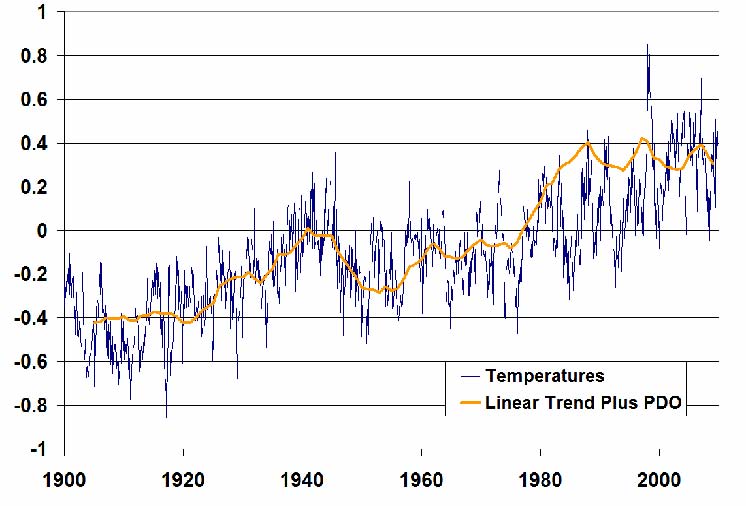
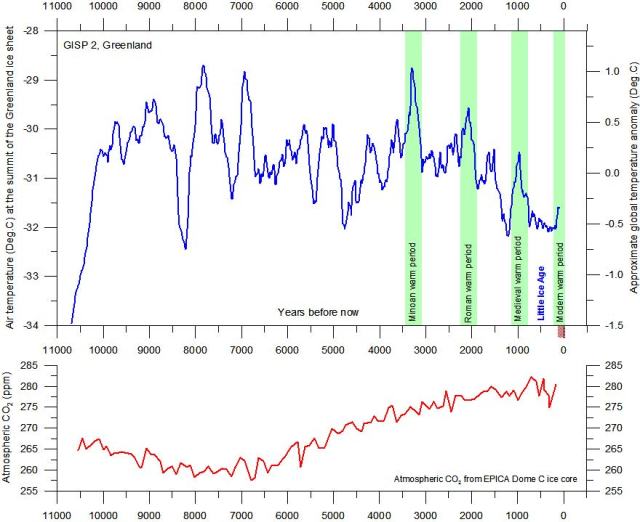
We do not know with any certainty how global climate might change naturally. It’s even possible that our emissions of carbon dioxide are protecting us from a serious global cooling episode, although I doubt that.  The rate of warming during the 1970’s through the 1990’s was no different than the warming that occurred between 1910 and 1940, or in the late 1800’s.  The planet has been coming out of the coldest period of the current interglacial known as the Little Ice Age from around 1350 to 1850.  This followed the Medieval Warm Period which records indicated was significantly warmer than the present.  Data from Greenland ice cores show that the last 300 years have been the coldest since the last glacial ended about 12 thousand years ago.Temperature Study with PDO - 1870 to 2010
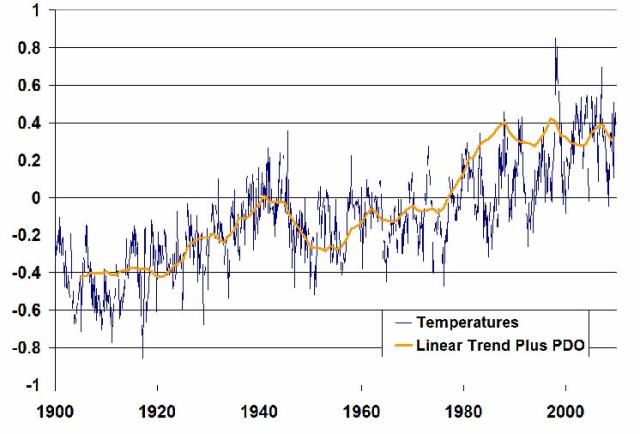
Transferring wealth to poor countries is certainly necessary and something we’ve done for a long time.  Doing it to compensate for economic losses from “combating climate change” would be pure folly.

We also need a global initiative to come up with ways to generate sustainable energy that actually work. Remember Solyndra, the U.S. solar energy start-up that went bust? Our experience with solar energy initiatives appears to have been spotty – at least in the public’s mind.

Perhaps we can look toward China, which is cutting its dependence on coal, oil and natural gas and replacing it with solar at a ‘breakneck pace,’ some media reports say, largely because it has no choice – its smog-filled cities are on the verge of being environmental catastrophes.

This all goes to show that countries can be prodded to act if they have to. Global warming, however, is a global problem and the most cost-effective way to attack this is if we all work together, spreading out the risks and the costs.

The mood after the recent United Nations Climate Summit, a lead-up to global negotiations that will take place in Peru, in December, and will culminate a year later in Paris, was upbeat. But only time will tell how much of the optimism generates real action and true political will.

A national energy policy is important, but not for reasons related to climate change or global warming. We need abundant and reliable energy to drive our economy–immune to international geopolitical pressures.  We need energy resources that do not pollute or harm the environment and are sustainable.

International efforts are fine as long as they are not contrary to the interest of our nation. The United Nations has not been very helpful in forging meaningful agreements on energy.  The efforts of the UNIPCC (United Nations International Panel on Climate Change) set back climate science at least 25 years.

There, I feel much better now!

Posted in Climate Science, Media, Musings, Politics, Uncategorized | Tagged , , , , , , , , , , , , | Leave a comment

Honesty, Competence, and Leadership

White HouseI did not vote for President Obama in 2008 or in 2012. Most of my friends and family members know this.  Some did vote for him, we’re still friends, and I still love those family members.  In the earlier election, I voted for Senator John McCain, although he was not my choice.  In that election and in 2012, I supported Governor Mitt Romney.

I’ve voted in every presidential election since 1964, and Governor Romney was and remains my favorite presidential candidate. Why?  Among other reason, because he’s honest and competent, and importantly, he’s a leader who cares about our country and longs for a better world.  I sincerely hope he runs again in 2016, but I sense he will not. He says his time has passed, that he had his chance.  He feels that he has been defined by the campaigning process, and he hopes that someone else who has not been tainted by an unsuccessful bid should run.  I believe he wants what is best for our country.

Ronald Reagan sought the presidency three times before winning the office in 1980. Five past presidents won the office after being nominated by their parties and defeated in earlier elections.  Many others ran multiple times with and without success.  Several past presidents lost local, state, and national elections before becoming president, most notably Abraham Lincoln.  Hillary Clinton was unsuccessful in her bid in 2008, and she’s apparently planning to run in 2016.  So, it shouldn’t matter.

This is a difficult time for our country and for the world. I’ve suggested that it has been a period of learning for us as a nation.  The hardest lessons usually leave the greatest mark.

In my previous post, I wrote about the Crazies and their irrationality.  I admitted that both major political parties have their Crazies.  This intense period of global unrest might have taught us some important lessons that will guide our voting decisions in the future, and I hope that is true.  The Presidency of the United States is the most important elected office in the entire world.  Who we elect is crucial to the future of our country and to all nations.  We need a person with unique abilities and vision, a competent leader who can discern the right course when confronted with seemingly impossible options, and then can rally the nation to that objective; someone who can explain why, as well as what we must do.  We need a president who listens to experts on all sides of an issue and carefully considers their guidance without concern for the direction the political winds are blowing.  We intend to elect leaders, not followers.  We don’t need a president who waits to see what is popular among the influential constituents before deciding what to do.  That is following.  Actually, it’s worse than that.  Following raw or uninformed public opinion is a road to certain failure of disastrous proportions.  Several hundred million preoccupied citizens with families and jobs and all sorts of other pressures and distractions cannot possibly know what the president and the army of talented advisors know.  An effective leader creates public opinion through rigorous analysis, strength of character, and clarity of communications.

We don’t yet know all the men and women who may decide to run for President in 2016. I hope there is an honest and competent leader among the candidates.  Someone who can earn our respect and our votes.

Posted in Human Behavior, Politics | Tagged , , , , , , , | 1 Comment